Description
How the RL-PIT-A detects leaks
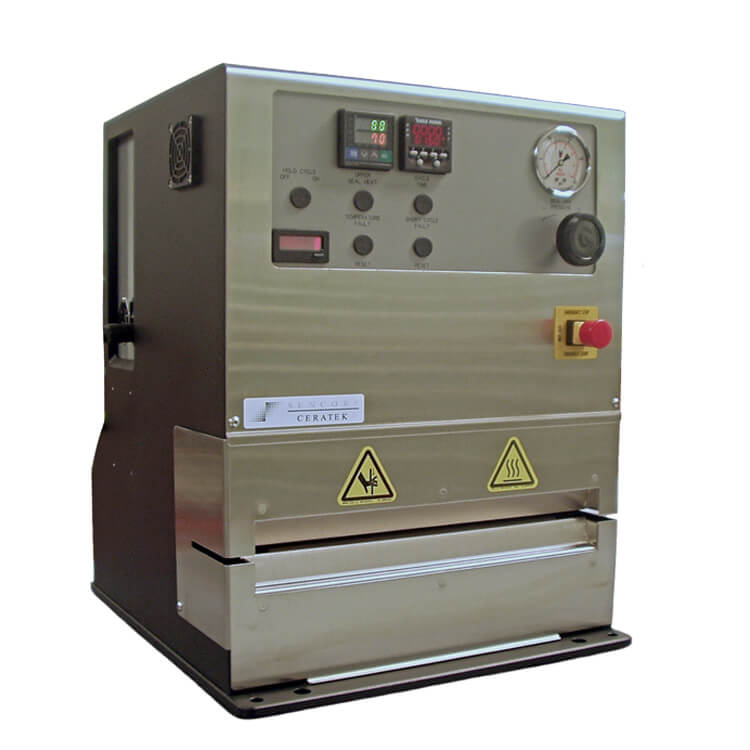
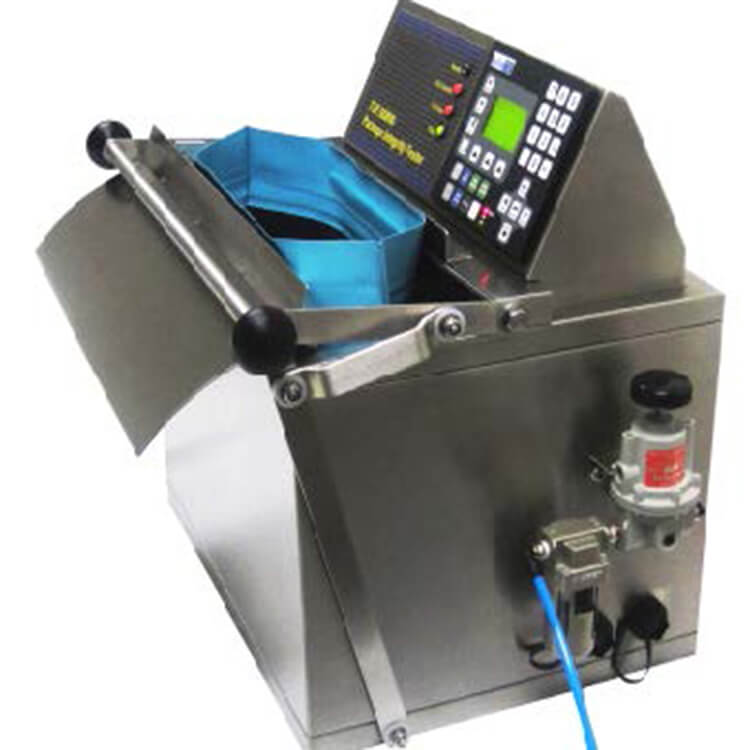
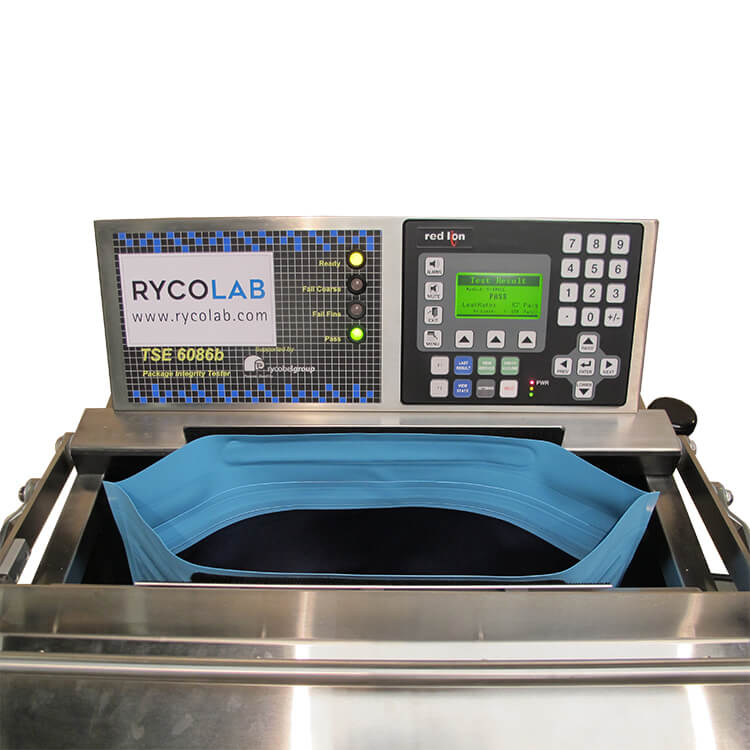
The RL-PIT-A uses a differential vacuum method to identify seal defects across a wide range of flexible pack types and sizes — without inflating, stressing, or destroying the package. When the operator closes the handle, the instrument’s flexible test chamber seals around the package and draws a controlled vacuum. Any breach — a pinhole, a weak weld seam, or an improperly formed seal — allows air or MAP gas to escape into the chamber. The instrument measures this leak rate with high resolution and compares it against your programmed pass/fail threshold, delivering a quantitative result on a backlit display alongside Pass, Fine Fail, or Coarse Fail lamp indicators.
Because the vacuum is applied externally rather than internally, package contents are never pressurized. Fragile or crush-sensitive products remain intact. This method reliably detects breaches as small as 10 microns — and does so without water, dye, or tracer gas.
Industries and applications
Food and snack packaging: Modified atmosphere packaging (MAP) relies entirely on an intact seal to preserve shelf life. A single pinhole in a salad bag, snack pouch, or fresh-cut meat pack allows oxygen ingress that accelerates spoilage and can trigger costly recalls. The RL-PIT-A verifies seal integrity on food packaging including biscuits, snack foods, salad packs, coffee, milk powder, and refrigerated deli items — without removing product from the production flow.
Pharmaceutical and medical packaging: The RL-PIT-A is used to test pharmaceutical pouches, sachets, and medical bandage packaging where seal integrity is critical to product stability. Its quantitative, traceable leak-rate output — with 30 days of onboard data logging and password-protected test parameters — supports quality programs that require structured test records.
Why non-destructive testing matters
Traditional destructive methods require disposing of every tested unit. On high-value products like specialty foods or pharmaceuticals, that scrap cost accumulates quickly. With the RL-PIT-A, every package that passes the test returns to saleable inventory undamaged — making high-frequency inline sampling practical in a way that destructive methods are not.
Key features
- Simple operation — test initiates automatically on handle closure
- Non-destructive and dry — no water, dye, or tracer gas required
- No special sample preparation needed
- Requires only compressed air and electricity
- Suitable for both laboratory validation and filling line QC
- Test cycles from 5 to 15 seconds for most standard pack sizes
- Pass, Fine Fail, and Coarse Fail lamp display plus quantitative backlit readout
- Up to 20 user-programmable test methods (numbered 0–19), password protected
- 30 days of onboard data logging, one file per day, with periodic upload capability for mandatory record keeping and trend identification
- Menu-prompted diagnostic functions and calibration routines for ease of traceability
- Recall of most recent test data to review test parameters
- Calibration port for both pressure and leak rate
- High-resolution leak rate measurement using internal vacuum via compressed air
- Keypad control for setting and adjusting test times and parameters
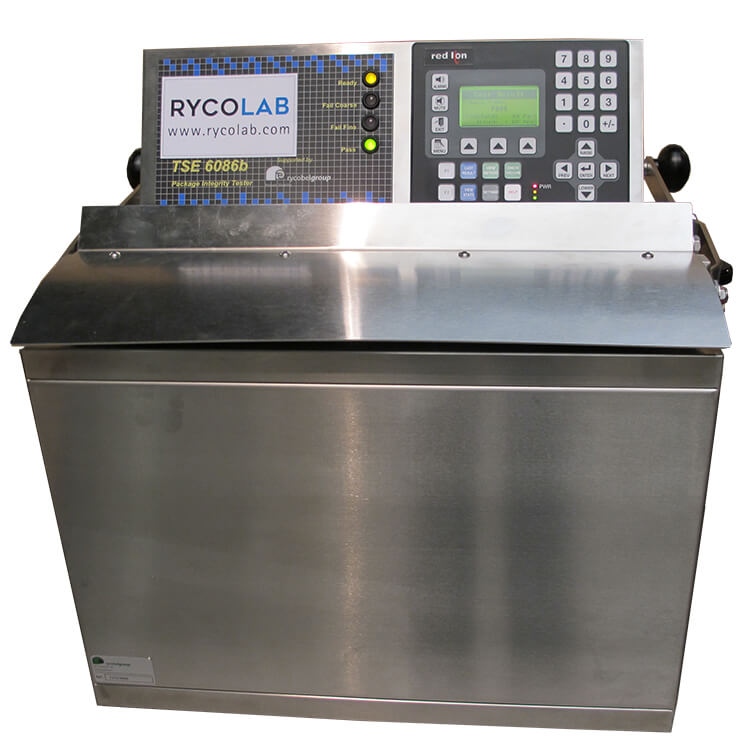
- Stainless steel construction suitable for food and pharmaceutical environments
- Accommodates items up to 400 x 300 mm depending on thickness
- Compressed air consumption: 60 L/min intermittent
- Power consumption: 50 watts
- Shipping weight: 35 kg
Options
- Vacuum pump and reservoir for highest-speed production testing
- Power input: 115V or 230V AC
- Trolley-mounted version for testing larger samples or floor-level production access
Lab use vs. filling line use
The RL-PIT-A is engineered for both environments without compromise. In the quality lab, 20 programmable test methods and structured data logging support new packaging format validation, incoming material audits, and formal package qualification studies. On the production floor, single-handle operation requires no specialized operator training — close the handle, read the lamp. The optional trolley-mounted configuration allows the instrument to be positioned directly adjacent to a filling or sealing line for high-frequency in-process sampling.
Also testing canned products?
If your facility runs both flexible packaging and canned goods, see the Rycolab RL-CIT-A Can Integrity Tester — the rigid packaging counterpart to the RL-PIT-A, using the same vacuum-decay method to detect seal defects in metal, cardboard, and composite cans. Both instruments are available from Thwing-Albert as part of a complete package leak detection program.
Request a quote or ask a question
Thwing-Albert is the authorized North American distributor for Rycolab testing instruments. Whether you’re qualifying a new packaging format, establishing an inline QC program, or replacing an aging leak detection system, our applications team can help you configure the RL-PIT-A for your specific packaging type and production environment. Contact us to request a quote, ask a technical question, or download the full product datasheet.