Upcoming Shows…
More Events
2025-2026 Events


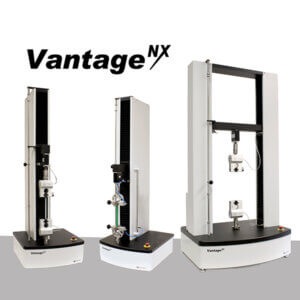
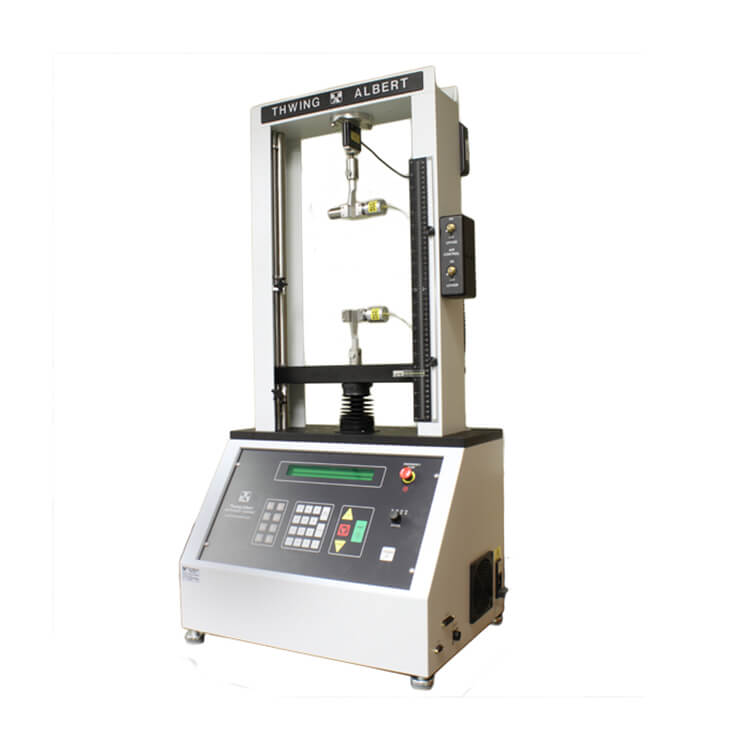
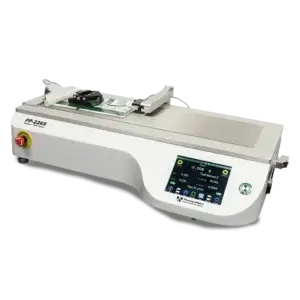
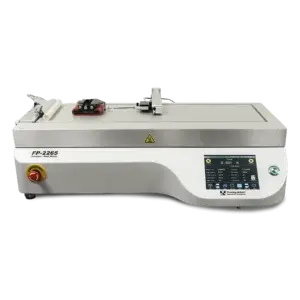
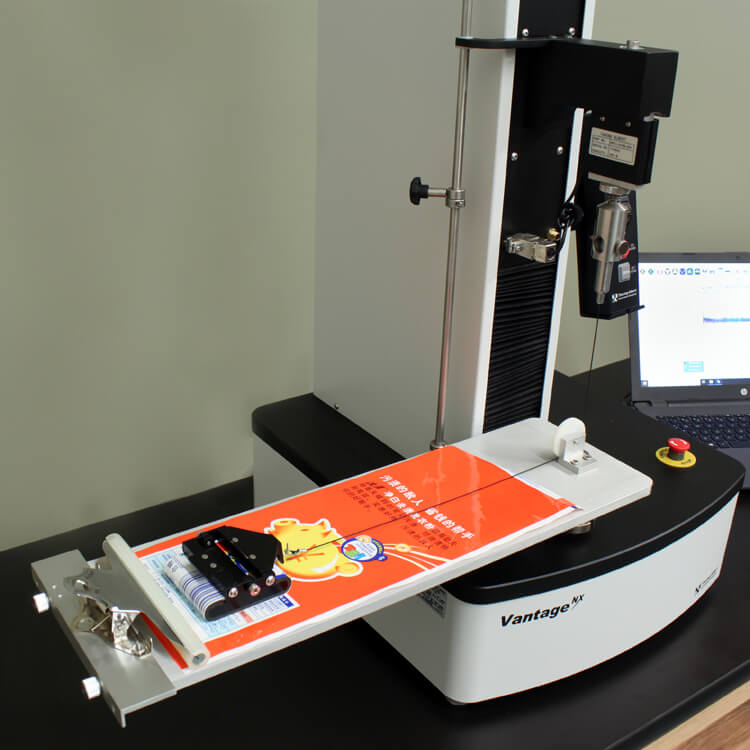
The right quality testing instrument depends on whether COF testing is a primary, dedicated function in your lab or one of several properties you need to test on the same equipment.
The FP-2260 can also be configured to meet related friction and peel testing standards, including:
The standards listed on this page represent a selection of common test methods — not a complete list. If you don’t see your standard, contact us and our team can help determine the right instrument for your test method.
Static coefficient of friction (COF) refers to the force needed to begin moving one surface relative to another, while kinetic COF refers to the force needed to keep the surfaces moving once motion has started. Static COF is typically measured from the initial peak force, while kinetic COF is measured as an average force over a defined sliding distance.
If coefficient of friction is a routine, high-volume test in your lab, a dedicated instrument like the FP-2260 is often more efficient, since it is purpose-built for COF along with peel and seal testing. If your lab needs COF testing as one of several mechanical properties evaluated on the same equipment, a universal testing machine like the VantageNX or QC-3A configured with a COF sled and fixture can be a more flexible option.
Yes. Coefficient of friction testing is often run at standard room temperature, but film behavior can change at the temperatures it will encounter during storage, processing, or end use. The FP-2260 supports an optional heated platen accessory for testing COF at elevated temperatures, which can help characterize how slip properties change under real-world conditions.
Inconsistent COF results are commonly caused by variation in sled weight or contact area, surface contamination on the sled or test plane, inconsistent film conditioning prior to testing, or testing at inconsistent sled speeds. Because COF measures a surface phenomenon, even small differences in how the film was produced, handled, or conditioned can affect results, so consistent test setup and sample handling are important for repeatable data.
Yes. In addition to its COF test mode, the FP-2260 includes a peel test mode for 180°, 90°, and T-peel testing, and a lightweight tensile test mode for tensile tests up to 10 kg (22 lbs). This makes it a flexible option for labs that need to test friction, peel, and seal properties on plastic film, paper, paperboard, and other packaging materials without multiple dedicated instruments.
If You Don’t See The Standard You Need, Click Here TO Contact Our Experts