Upcoming Shows…
More Events
2025-2026 Events


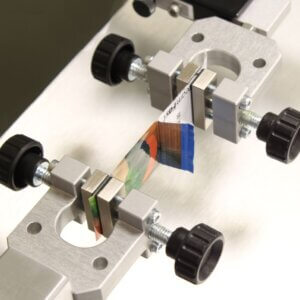
F88 quantifies the force needed to separate a sealed specimen — the strength of the seal itself, not the strength of the material around it. Just as importantly, it characterizes how the seal gave way. A seal that peels cleanly at the interface and one that tears through the substrate can report similar forces while telling you very different things about your sealing process. Force and failure mode are read together.
Seal strength is not the same as package integrity. F88 evaluates a seal; it does not prove an entire package is sound. Most package failures do originate at the seal, which is why F88 carries so much weight — but it sits alongside leak detection rather than replacing it.
F88 is most closely associated with medical device packaging, where seal strength is part of validating a sterile barrier system and demonstrating it survives sterilization, distribution, and shelf life. It is equally routine in flexible packaging and food production, where seal performance governs shelf life and product protection.
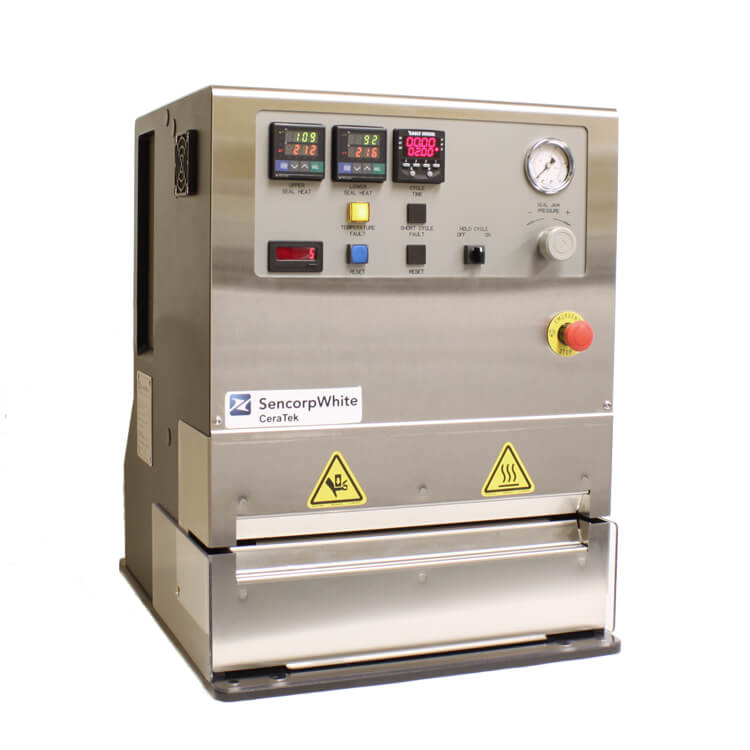
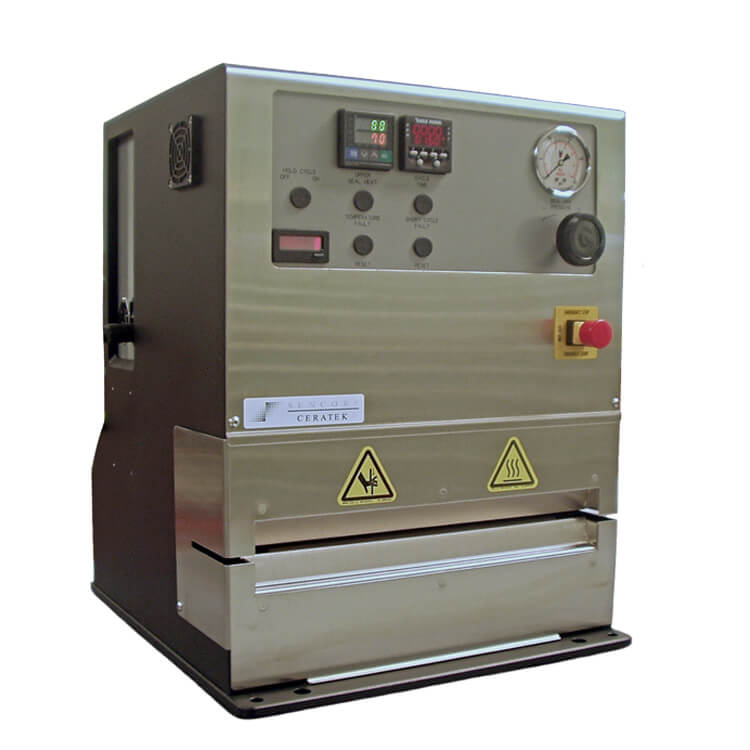
F88 measures a seal you produced — so if the sealing step isn’t controlled, neither is the data. CeraTek AS/1 Heat Sealers (12″ and 24″) pair surface-mounted thermocouples, a temperature controller, digital timer, and dual-action cylinders to deliver repeatable seals. The CeraTek ASL/1 adds an independently controlled lower sealing die, which matters when you’re characterizing seal behavior across a range of temperatures rather than at a single setpoint. See all CeraTek heat sealers.
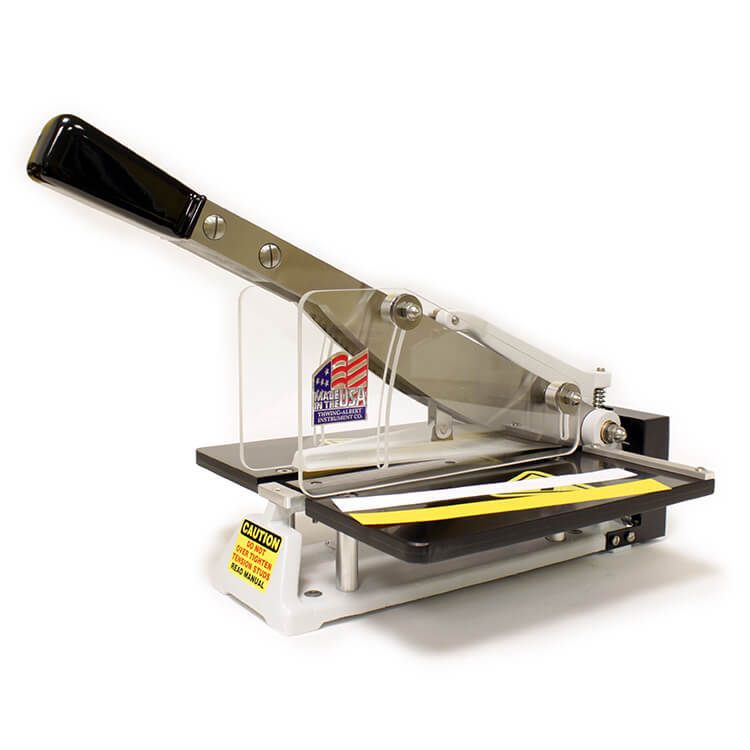
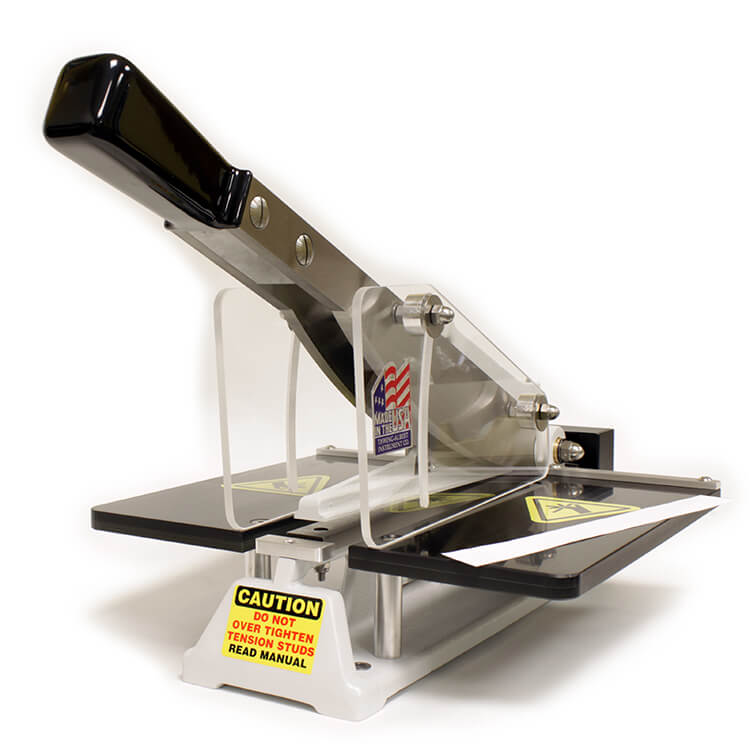
Thwing-Albert manufactures two strip cutters for F88 work, and the right one depends on the edge quality and width range your program needs.
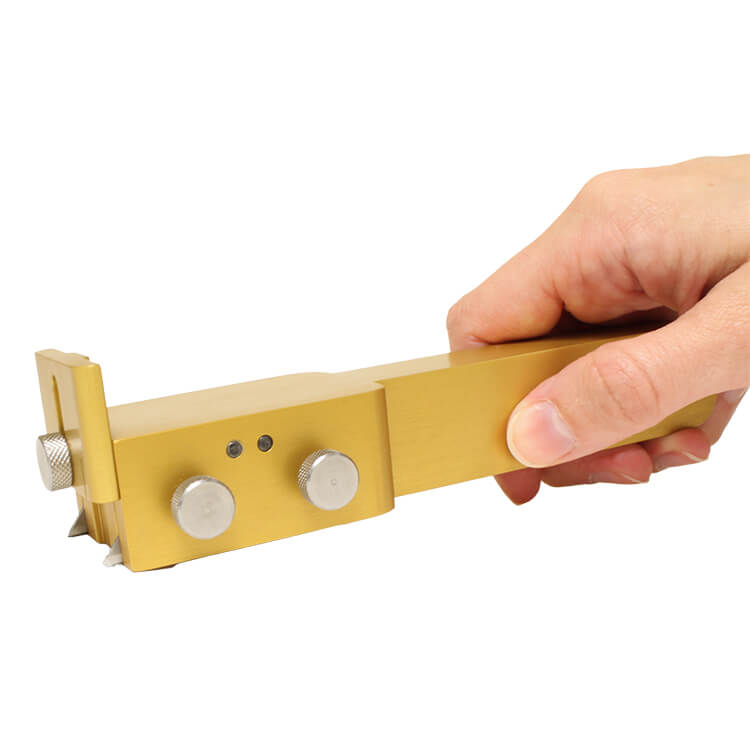
The MTT Strip Cutter is a manual cutter built for exactly this test — it prepares 1″ or 15 mm specimens, with blade slots that hold width accuracy within 0.5% for ASTM F88 compliance, and a safety locking mechanism that shields the blades between cuts. It’s the fast, cost-effective choice when you’re cutting F88 specimens at the standard width day in and day out.
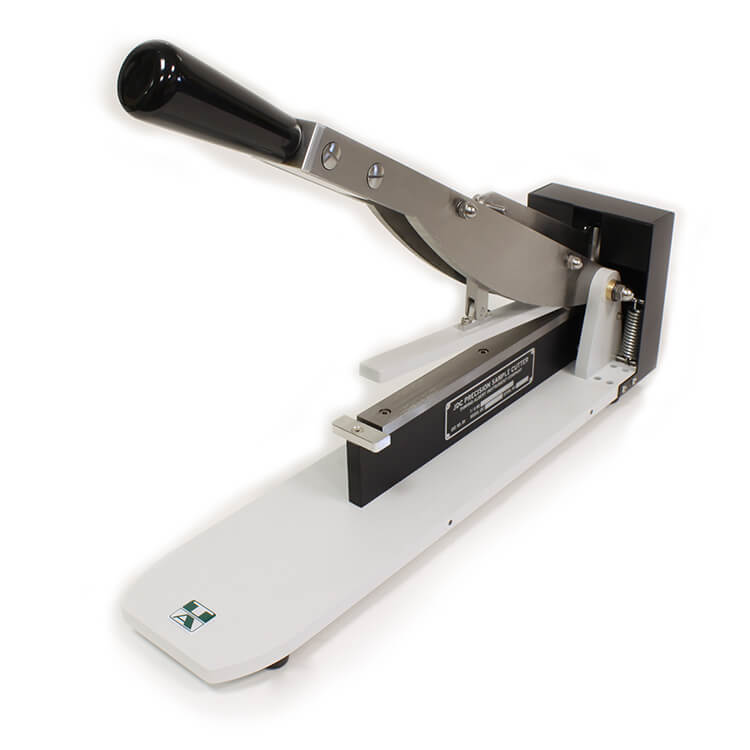
The JDC Precision Sample Cutter is also designed to meet ASTM F88 and goes further on both counts: ±0.001″ cutting accuracy with defect-free edges, and a twin guillotine design that shears both sides at once to hold width parallel across the full specimen length. Available from 0.125″ to 3″ wide in 10″, 12″, and 16″ lengths, it’s the choice when you need widths beyond 1″/15 mm, when edge quality is critical, or when one cutter has to serve F88 alongside tensile and other methods.
Compare both strip cutters →
How much does the cut itself matter? We put it to the test. In a Thwing-Albert study on thin plastic film tested to ASTM D882, the two cutters produced visibly different edges at 200× magnification — and measurably different tensile results. Read the sample preparation study →
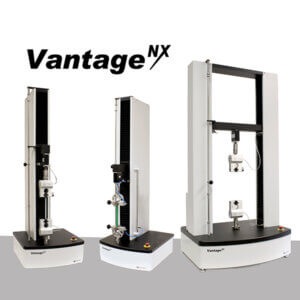
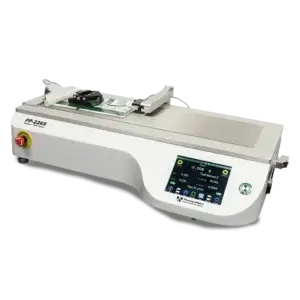
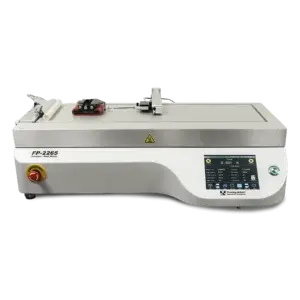
The VantageNX Tensile Testing Machine is a fully customizable system for seal strength and the other properties a packaging lab measures — peel resistance, opening force, and tensile — in a footprint that works on the production floor as readily as in the lab. For labs focused on seal, peel and COF quality testing, the FP-2260 Friction/Peel Tester offers a benchtop alternative, with a seal strength configuration for meeting ASTM F88.
MAP4 Materials Testing Software is what drives testing on the VantageNX with ASTM F88 included in its test method library, so the method is configured and ready rather than built from scratch. The software provides advanced data analysis, graphing, and storage and recall for your results.
F88 tells you how strong a seal is. It does not tell you whether the package is sealed — a seal can meet its strength criteria and still have a channel, a pinhole, or a contaminated seal area. In medical device and pharmaceutical packaging, both questions have to be answered, which is why seal strength and package integrity testing run alongside each other.
Thwing-Albert is the US distributor for the DVACI CDV Vacuum Chamber Leak Tester, which detects leaks visually and identifies the point of failure on pouches, bags, bottles, tubes, and blister packs. Five models are available in bench-top and floor-stand configurations, including a version configured for pharmaceutical packaging applications. Related methods include ASTM F2096 (bubble leak), ASTM D3078, and ASTM D6653 (altitude simulation).
Yes. The M designation indicates the standard’s SI (metric) units are published alongside inch-pound units. Specifications may cite either form.
The standard defines three, and they differ in how the unsealed legs are supported during the pull. Each contributes a different bending component to the measured force, so results from different techniques aren’t interchangeable. Pick the one that reflects how your package actually opens and stay consistent across the program.
If you’re cutting at the standard 1″ or 15 mm width, the MTT Strip Cutter is purpose-built for it and holds width within 0.5%. Choose the JDC Precision Sample Cutter when you need other widths, when edge quality is critical to your material, or when you plan to use the cutter to prepare samples for ASTM F88 alongside tensile and other quality testing methods.
Cut quality demonstrably changes tensile results — we’ve measured it. For seal strength specifically, specimen width accuracy is the more direct concern, since seal strength is reported relative to specimen width. A specimen cut wider than nominal skews the result.
Not if you’re testing seals pulled from production packages. You do if you’re developing a sealing process, qualifying a new material, or characterizing seal strength across sealing conditions — that work requires making specimens under known, repeatable conditions.
F88 measures a seal that has cooled. Hot tack — ASTM F1921 — measures seal strength immediately after sealing, before the seal has set. Packaging lines that load a seal before it cools need both numbers.
Generally yes. The VantageNX is configured with grips and fixtures for the specific methods you run, so seal strength, T-peel (D1876), tensile, and related tests can share one frame. Tell us your method list and we can spec the right testing instrument for your needs.
It means the seal met your strength criteria. Package integrity is a separate question — see the DVACI leak testers above.
Thwing-Albert has manufactured testing instrumentation for quality control labs, R&D groups, and universities for over a century, and we’re ISO 9001 certified and ISO/IEC 17025 accredited. Contact our experts to spec an ASTM F88 setup around the packages you are producing.