Upcoming Shows…
More Events
2025-2026 Events


ASTM D689 is the standard test method for internal tearing resistance of paper, following the Elmendorf tear method. Tear resistance is a key physical property of paper used in quality control and specification testing, indicating how well a paper will resist propagating a tear once it has been initiated. The standard is widely referenced in the paper, paperboard, packaging, and converting industries.
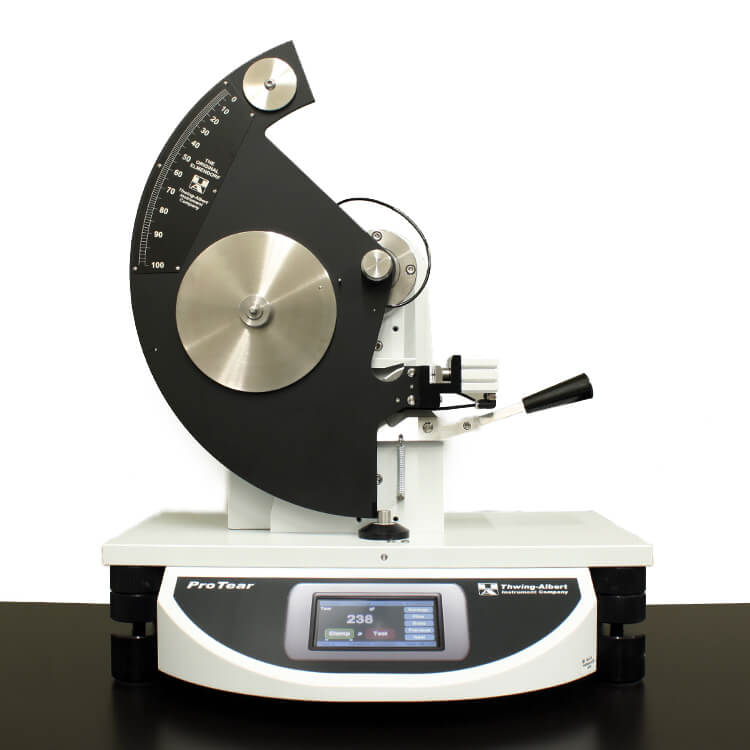
The ProTear Electronic Elmendorf Tear Tester is designed to meet ASTM D689 and a broad range of other Elmendorf tear testing standards across paper, plastic film, textiles, foils, and roofing materials.
With over 125 years of experience in materials testing, Thwing-Albert designs tear testing instruments built to meet the precision requirements of established standards. The ProTear is an electronic Elmendorf tear tester with a touchscreen interface, toolless pendulum mounting, and one-touch pneumatic clamping — providing fast, precise, and repeatable tear resistance measurements that meet the requirements of ASTM D689, backed by our ISO 9001 certified commitment to quality.
ASTM D689 is widely used in paper and paperboard manufacturing for incoming material inspection, in-process quality control, and final product acceptance testing. Tear resistance is an important attribute in packaging papers, converted products, and specialty papers where resistance to tearing during handling, converting, or end use is a specification requirement. The standard is also referenced alongside TAPPI T414 and ISO 1974 in many paper industry quality programs.
The ProTear can also be configured to meet a range of related tear testing standards, including:
The standards listed above represent a selection of common tear test methods — not a complete list. If you don’t see your standard, contact us and our team can help confirm the right pendulum capacity and configuration for your method and material.
ASTM D689 specifies the test method for measuring the internal tearing resistance of paper using the Elmendorf falling-pendulum method. The test measures the energy required to propagate a tear through a defined length of a pre-cut paper specimen. The standard specifies the specimen preparation, pendulum capacity selection, and test procedure required to produce results that are repeatable and comparable across labs.
Test results should fall between 20% and 80% of the pendulum capacity being used. For example, when testing with a 1600g pendulum, valid results fall between 320g and 1280g. If results fall outside this range, a different pendulum capacity should be selected. The ProTear supports capacities from 200g to 12,800g through its two pendulums and augmenting weights, allowing the correct range to be selected for the paper grade being tested.
Both ASTM D689 and TAPPI T414 measure the internal tearing resistance of paper using the Elmendorf falling-pendulum method, and the two standards are closely aligned. The primary difference is in the published test method documentation and the organization that maintains it — ASTM International for D689 and TAPPI for T414. The instrument and test principle are the same. The correct standard to follow depends on your customer specification or quality program requirements.
Yes. The ProTear is used to test a broad range of sheet materials in addition to paper, including plastic film, textiles, foils, and roofing materials. Each material type may require a different pendulum capacity and the applicable standard for that material should be followed. The ProTear’s capacity range of 200g to 12,800g accommodates the tear resistance requirements of a wide variety of materials.
Yes. Thwing-Albert is the original manufacturer of the Elmendorf Tear Tester. The instrument was co-developed by Dr. Thwing and Mr. Armin Elmendorf — the method they established over a century ago became the basis for the industry standards used worldwide today to measure internal tear resistance, including ASTM D689 and TAPPI T414.