Description
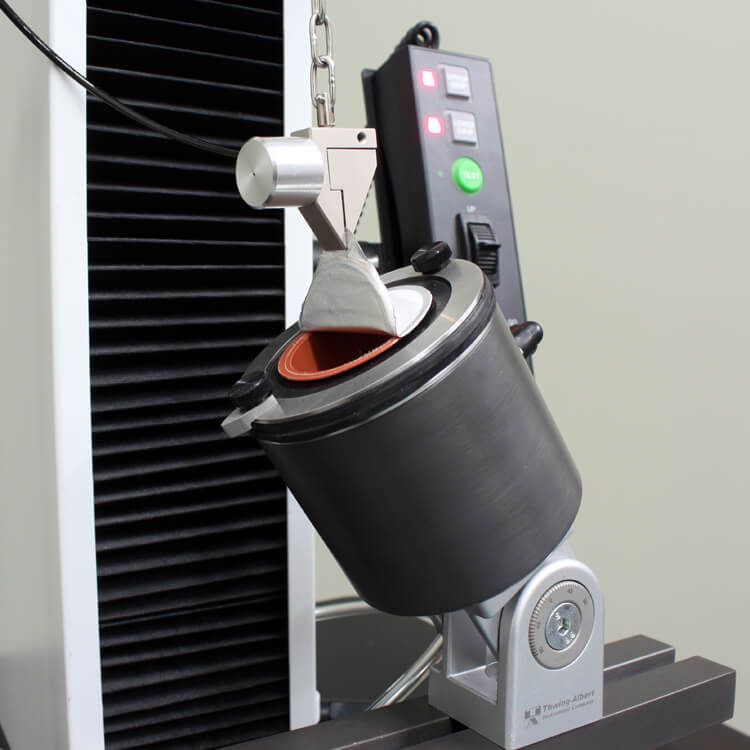
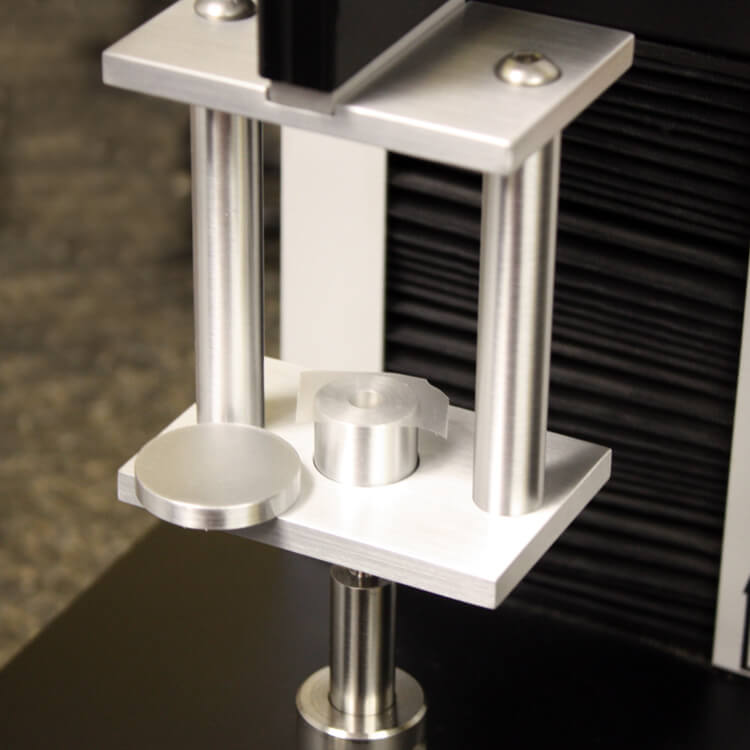
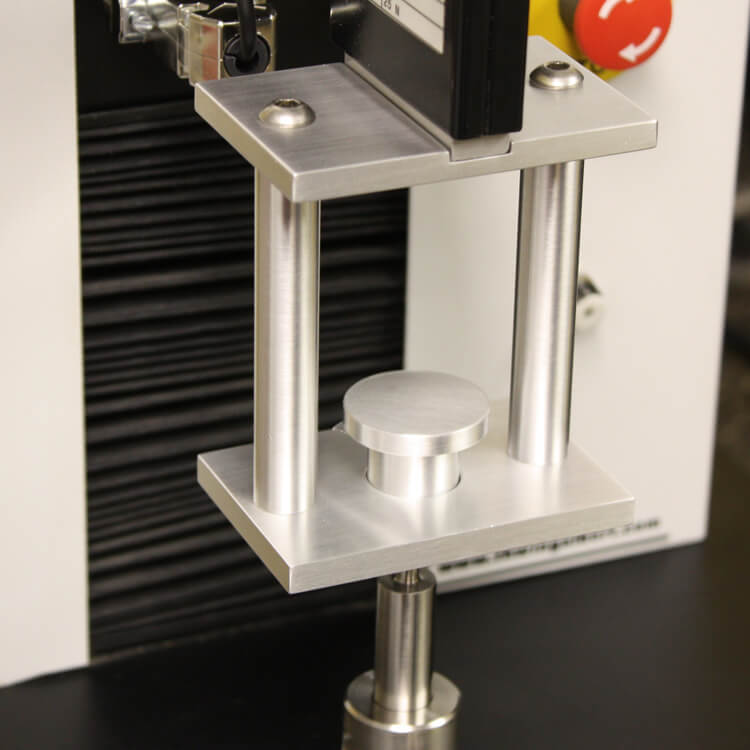
This probe tack fixture (Part #00720-3060) mounts on a Thwing-Albert Vantage testing machine to run the inverted probe tack method defined by ASTM D2979. It measures how quickly and strongly a pressure-sensitive adhesive (PSA) grabs a surface on brief contact — the property adhesive engineers call “tack.”
What Is Inverted Probe Tack Testing?
In an inverted probe test, a flat-tipped probe contacts the adhesive surface under a light, controlled load for a short dwell time, then withdraws at a fixed speed. The peak force required to separate the probe from the adhesive is recorded as the tack value. Because contact and separation happen almost instantly, the result reflects real-world PSA performance: how well a label, tape, or film grabs on first touch, before any dwell time builds a stronger bond.
The method applies to pressure-sensitive adhesives that bond quickly and release cleanly, without leaving visible residue, and it’s suitable for both rigid and flexible adhesive constructions. It remains a common reference method across adhesive, tape, and label manufacturing for quality control and formulation work.
How the Fixture Works With Your Vantage System
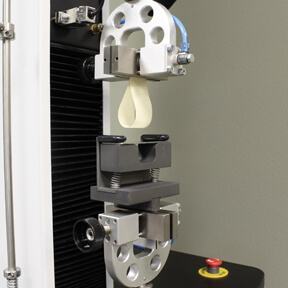
The fixture attaches directly to a Vantage Universal Testing Machine, positioning the probe above the adhesive sample. The crosshead drives the probe into contact, holds it for a set dwell time, then retracts it while the load cell captures the separation force in real time.
MAP4 Materials Testing Software analyzes the resulting force curve to report peak tack force, along with statistics across replicate samples — useful for comparing adhesive formulations, tracking lot-to-lot consistency, or validating a supplier’s material against a target tack spec.
Setting Test Parameters
Probe diameter, contact pressure, dwell time, and separation speed are all configurable in MAP4 to match your internal specification or your adhesive supplier’s reference method. If you’re setting up a test for the first time and don’t have a defined procedure yet, our applications team can help configure parameters appropriate to your material and application — contact us for guidance specific to your sample.
Related Testing Methods & Equipment
- Loop Tack Fixture – ASTM D6195 / FINAT FTM 9 / PSTC 16 — the loop-tack method most commonly specified for labels and tapes, measuring tack via a looped sample against a plate rather than a probe.
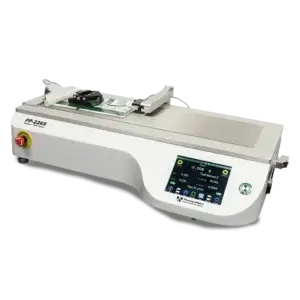
- Peel Fixtures — for measuring bond strength after an adhesive has fully set, complementing tack data with peel and seal strength results.
- Adhesive Testing Equipment — browse the full range of Thwing-Albert instruments for adhesion, tack, peel, and seal strength testing.
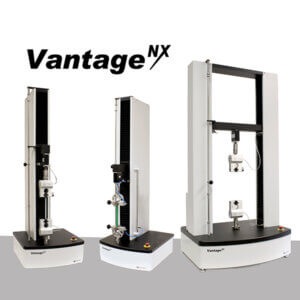
- VantageNX Universal Testing Machine — the testing frame this fixture is designed for.
- MAP4 Materials Testing Software — analyzes and reports tack data from every test run.
FAQ
What’s the difference between probe tack and loop tack?
Probe tack measures adhesive grab using a flat probe pressed briefly into the adhesive. Loop tack (ASTM D6195, FINAT FTM 9, PSTC 16) measures a looped strip of tape or label stock contacting a plate. Labs often run both, since they can rank adhesives differently depending on backing flexibility.
Does FINAT or PSTC have their own probe tack standard?
Not directly. FINAT and PSTC’s tack methods (FTM 9 and PSTC 16) are loop tack tests, not probe tack. The closest related PSTC method is rolling ball tack (PSTC-6), which uses a different mechanism than a probe.
Can this fixture test both rigid and flexible adhesives?
Yes. The inverted probe method evaluates PSAs regardless of whether they’re mounted to a rigid or flexible substrate, as long as the adhesive releases cleanly without residue.
How do I choose the right test parameters for my adhesive?
Start with your internal specification or the adhesive manufacturer’s reference method if one exists. If not, our applications engineers can help you set an appropriate probe size, contact pressure, dwell time, and speed based on your material and intended use — see our note on sample preparation for related setup considerations that affect test repeatability.